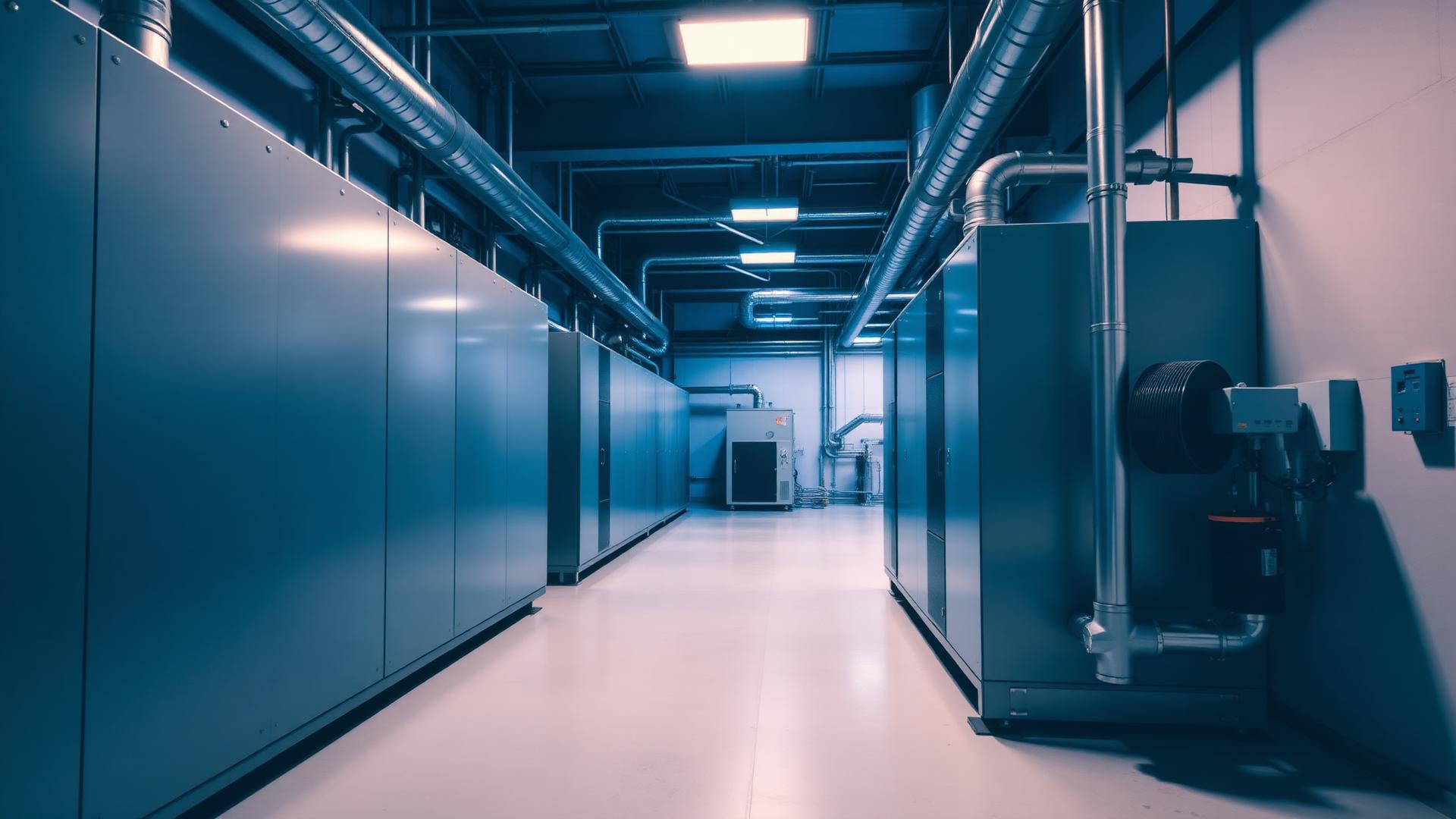
Industrial cooling installation
Applications

Industrial cooling differs by sector, and by process

Per sector below: how we set up the installation, what we watch for, and which choices make the difference. No generic product shots, just the approach you should expect from an engineering partner.

Core expertise
Core expertise

Plastics & injection moulding

Our home market. Stable mould cooling under peak load shortens cycle times, keeps dimensions predictable and extends the life of expensive moulds. We size on your full machine park, not on one press in isolation.

How we deploy it

  • Central chiller with buffer tank and closed 12/18 °C ring, separated from the mould-temperature loop.
  • Free cooling module for winter operation, keeping the compressor largely off for 4-6 months a year.
  • Redundant pumps and zoned circuits per machine group, so service on one press doesn't stop the line.

What we watch for

  • Water quality and glycol ratio: badly conditioned water is the top cause of corrosion in mould channels.
  • Peak vs average load: we size on coincidence, not on the sum of nameplate ratings.
Get advice for plastics & injection moulding
Other applications

From laser and labs to energy, data centres and chemistry

Laser & metalworking

Laser sources, spindles and resonators need tight temperature bands, usually ±1 °C or tighter. Vibration and return-temperature spikes show up directly in cut quality and source life, so cooling becomes part of QA.

How we deploy it

  • Precision chiller with EEV, PID control and separate low- and high-temperature loops for source and optics.
  • Low-vibration setup: rubber-in-shear mounts, flexible couplings and separated foundation zones for fibre lasers.
  • Deionised water with inline conductivity monitoring and auto top-up, per source-vendor spec.

What we watch for

  • Ambient impact: in 35 °C halls chiller efficiency drops fast, so we prefer outdoor or free-air placement.
  • Redundancy: one back-up compressor saves a day of output when a big job fails mid-run.
Get advice for laser & metalworking

Food & beverage

Hygiene, temperature assurance and energy efficiency at once. Breweries, dairy and food processors typically run glycol loops between -8 and +4 °C, with heavily variable daily load and strict audit requirements. Heat recovery is almost always a quick win.

How we deploy it

  • Glycol chiller with stainless steel primary heat exchanger and HACCP-friendly placement, separated from process zones.
  • Heat recovery into CIP water or DHW, typically 20-30% of compressor energy reused.
  • Buffer optimisation: a properly sized ice-water tank flattens peak demand and lowers installed capacity significantly.

What we watch for

  • Refrigerant choice aligned with F-gas policy: A2L or natural refrigerants when your compliance horizon demands it.
  • Continuity during seasonal peaks and CIP cycles: we schedule service around your production windows.
Get advice for food & beverage

Laboratories

Analysis equipment, reactors and R&D setups where temperature directly drives measurement results. Often low capacity but high demands on stability, noise and uptime, since downtime means a lost measurement day or ruined batch.

How we deploy it

  • Compact precision chillers with -10 to +40 °C range, usually with touchscreen control and logging for GMP/GLP audits.
  • Silenced installation with enclosure and vibration dampers, suitable for lab environments below 55 dB(A) at 1 m.
  • Alarming and remote monitoring, so an overnight fault isn't discovered only the next morning.

What we watch for

  • Chemical compatibility of fluids and O-rings for non-standard media like silicone oils or ethanol.
  • Documentation and qualification: IQ/OQ files and traceable calibration on temperature probes when your QA needs it.
Get advice for laboratories

Energy, hydrogen & biogas

Electrolysers, gas treatment and energy storage often run outdoors year-round. Ruggedness, corrosion resistance and field-serviceability matter more than a minimal footprint. We use containerised skids by default.

How we deploy it

  • Containerised cooling unit with insulated enclosure, weatherproof coating and heated crankcases for -20 °C cold start.
  • N+1 redundant design with automatic changeover, ATEX zoning where the installation requires it.
  • Free cooling combined with adiabatic pre-cooling, for low OPEX in the Dutch climate.

What we watch for

  • Certification and paperwork: CE, PED, ATEX and client-specific inspections planned upfront in the project.
  • Life-cycle instead of sticker price: our quotes include a 10-year OPEX estimate for fair comparison.
Get advice for energy, hydrogen & biogas

Air-conditioning & data centres

Critical rooms and (edge) data centres tolerate no interruption. Cooling is effectively part of your uptime promise to your own customers. Free cooling and, where it fits, direct liquid cooling visibly lower PUE.

How we deploy it

  • N+1 or 2N redundant design with concurrent-maintainable components, so service is possible during production.
  • Free cooling prioritised with adiabatic boost for hot days, target PUE below 1.3.
  • Optional direct liquid cooling for rack densities above 30 kW, with CDU and distributed manifolds.

What we watch for

  • SLA assurance: maintenance windows tightly aligned with your change management, 24/7 backup where needed.
  • Component-level monitoring, so a trend (lower efficiency, pressure drop) is spotted before a fault occurs.
Get advice for air-conditioning & data centres

Chemistry & pharma

Reactor cooling, condensers and TCUs under strict process and safety frameworks. Material choice, refrigerant and documentation matter as much as raw capacity, and mistakes upfront are expensive to fix later.

How we deploy it

  • TCUs from -25 to +200 °C, heat and cold on a single skid, with inertisation where required.
  • ATEX execution where zoning requires, with double-wall integrity on fluid circuits.
  • Full dossier: material certificates, pressure calculations, PED compliance and client URS check before delivery.

What we watch for

  • Change control: any change to a qualified installation runs jointly with your quality team.
  • Corrosion: media analysis upfront, choosing duplex, Hastelloy or PTFE lining where carbon steel falls short.
Get advice for chemistry & pharma
Consultation

Discuss your application with us

No two processes are alike. Tell us what you want to cool, we think along. Existing installation due for replacement? We are happy to discuss the options, including responsible disposal or reuse of your current equipment.

We will contact you within 1 business day. Your details are not shared with third parties.